The measure is part of a national strategy to accelerate the elimination of the disease in the country.
The community volunteers (ColVols) are mostly from border communities and will be trained with support from RMEI/IDB.
At a decisive moment for the country’s public health, the Dominican Republic has launched the pilot of the Community Health Volunteers program (ColVol), a community-based strategy designed to strengthen surveillance, diagnosis, and timely treatment of malaria in areas with a high risk of transmission.
This initiative, led by the Ministry of Public Health through the Center for the Prevention and Control of Vector-Borne and Zoonotic Diseases (CECOVEZ), is being implemented initially in the provinces of Elías Piña and San Juan—territories near the border with Haiti that account for a large share of the country's malaria burden. The effort is part of the national commitment to achieving malaria elimination by 2030, supported technically and financially by the Inter-American Development Bank (IDB) through the Regional Malaria Elimination Initiative (RMEI).
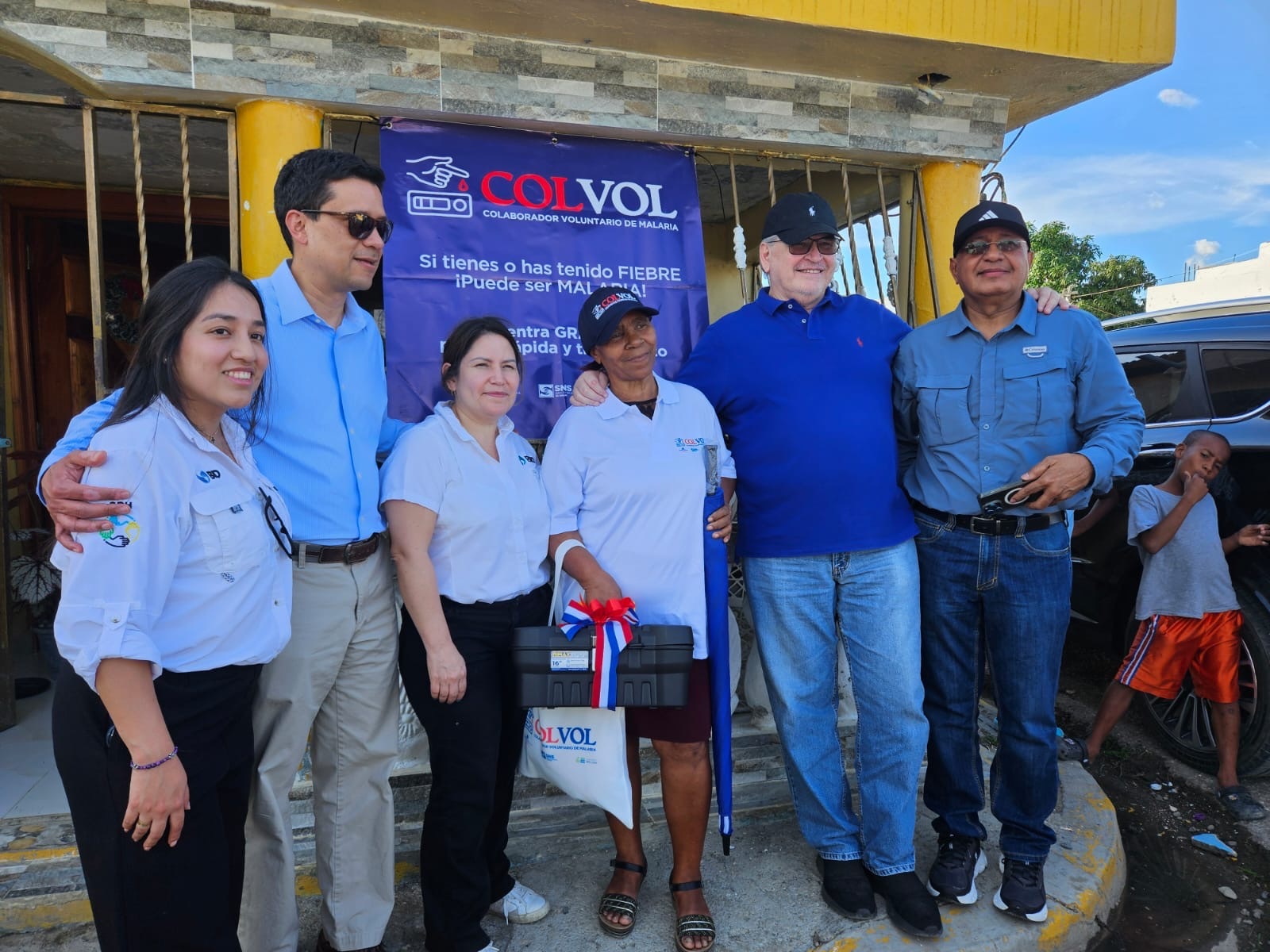
The ColVol strategy selects, trains, and supervises respected community members to carry out rapid diagnostic tests (RDT), thick blood smears, first-dose treatment supervision, timely referrals, and prevention and public health counseling. Through this approach, ColVols become a vital bridge between the health system and communities where barriers to accessing health services persist, particularly malaria diagnosis and treatment.
During the RMEI supervision mission held from November 25 to 28, 2025, teams from the Ministry of Health, international partners, and IDB specialists verified the installation of the first ColVol posts, the quality of the training provided, and the commitment of the volunteers. Findings confirm that the strategy is well-positioned to identify and treat cases promptly, reducing access gaps and strengthening the community-level surveillance network.
These efforts build on a strong foundation: in 2023, the Dominican Republic achieved a 99.5% reduction in transmission in the historic urban hotspot of Los Tres Brazos—a milestone that marked a turning point in the country’s path toward elimination and earned it regional recognition.
The Ministry of Public Health has emphasized that this strategy represents a significant step toward closer and more responsive surveillance. For its part, the Inter-American Development Bank highlighted the value of the community-based approach and interinstitutional coordination, noting that “the Dominican Republic is demonstrating that the combination of national leadership, technical evidence, and community participation can transform malaria surveillance. The ColVol model strengthens the pillar of diagnosis and timely response, and concretely accelerates the country’s path toward elimination,” said Emma Iriarte, Executive Secretary of RMEI.
A firm step toward elimination
With the installation of the first ColVol posts and the strengthening of the Detection, Diagnosis, Treatment, Investigation, and Response (DDTIR/DTI-R) strategy, the country is consolidating a more robust, sensitive, and territory-focused surveillance network. The pilot will shape the roadmap for a potential nationwide scale-up in 2026, contributing to the goal of interrupting transmission in all active foci, maintaining vigilant and timely response capabilities to prevent resurgence, and securing a malaria-free future for the Dominican Republic.

About RMEI
The Regional Malaria Elimination Initiative (RMEI), administered by the Inter-American Development Bank (IDB), is a partnership that brings together the countries of Mesoamerica, along with Colombia and the Dominican Republic, and strategic partners such as the Carlos Slim Foundation, the Gates Foundation, and the Global Fund. Its goal is to accelerate and sustain progress toward malaria elimination through results-based investments, strengthened surveillance systems, innovation, technical assistance, and regional cooperation.
Press contact
Name: Anderson Simanca
Email: [email protected]
Phone: +1 202 937 5873