This progress is no coincidence: it is the result of a sustained strategy grounded in evidence, therapeutic innovation, and technical cooperation among the Ministry of Health, the Costa Rican Social Security Fund (CCSS), Inciensa, and the Regional Malaria Elimination Initiative (RMEI), administered by the IDB.
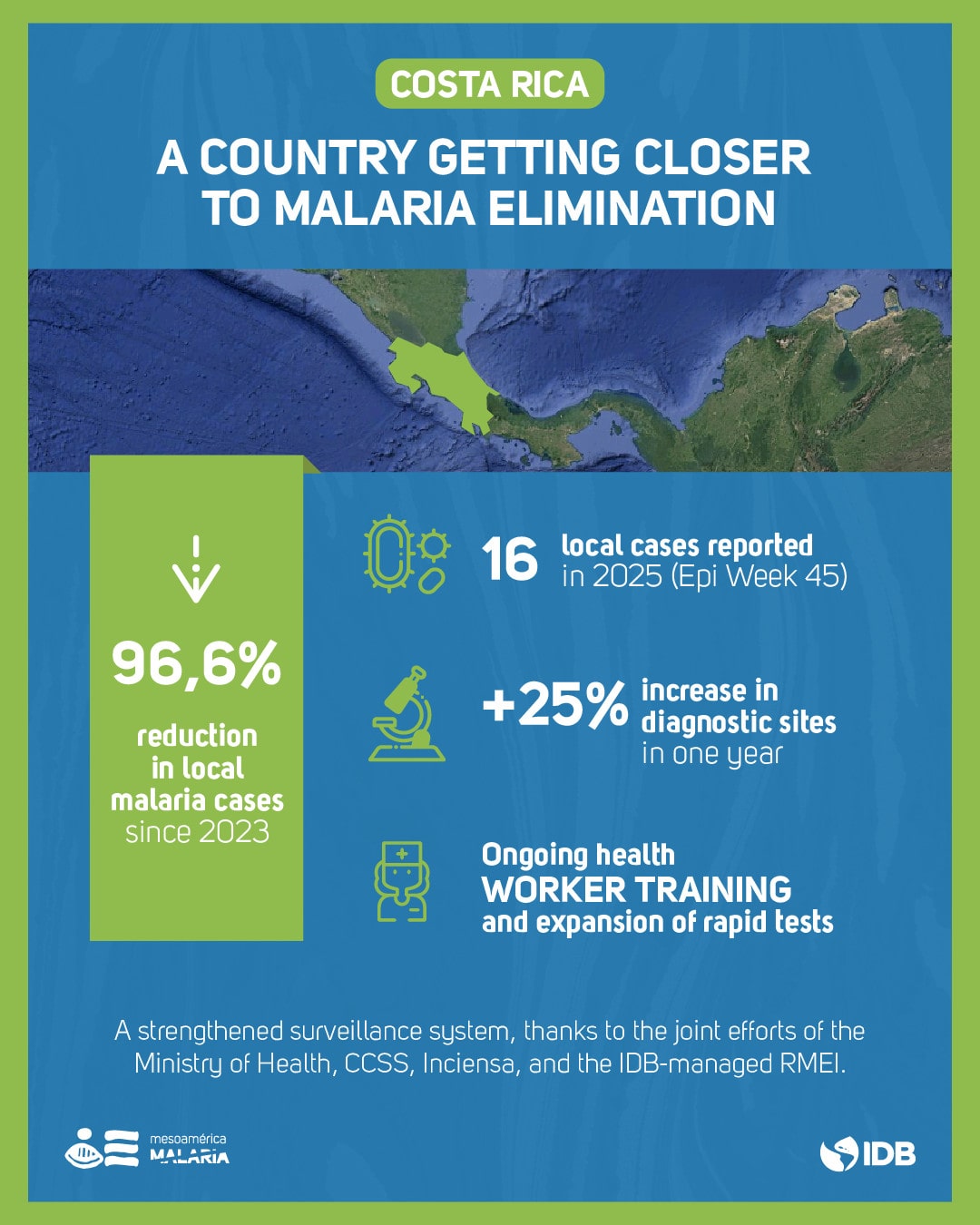
Since 2023, the country has reduced local malaria cases by nearly 97% and strengthened its diagnostic network with more sampling points, rapid tests, and continuous training for health personnel. These efforts have enabled faster detection and treatment, especially in communities where active surveillance is essential to interrupt transmission.
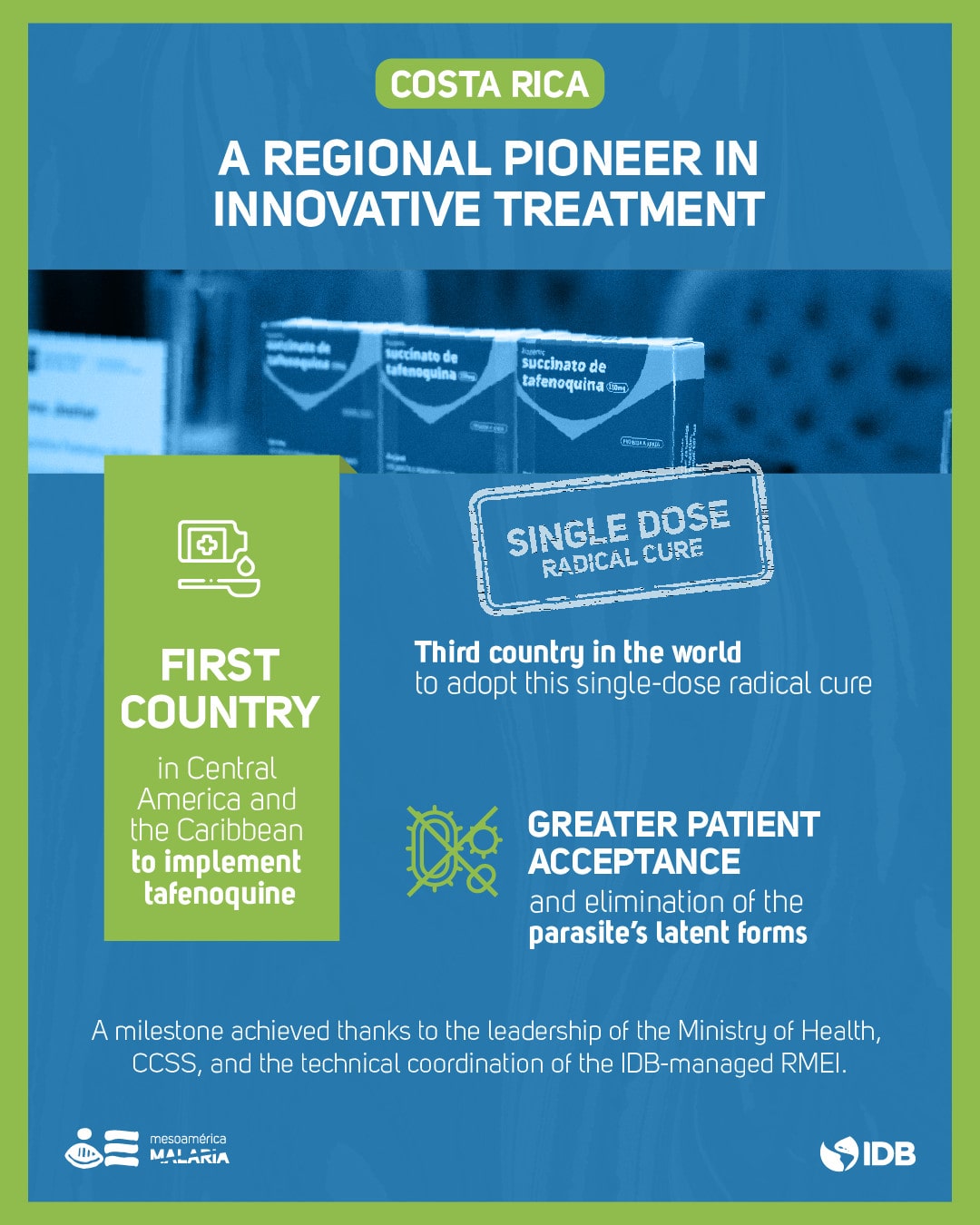
A key milestone has been the introduction of tafenoquine, a single-dose radical cure that eliminates the parasite’s latent forms. Costa Rica is the first country in Central America and the Caribbean—and the third in the world—to implement this therapeutic innovation, thanks to effective coordination between national institutions and RMEI-IDB.
This progress also reflects the successful adoption of a results-based financing (RBF) model, a core pillar of RMEI. RBF aligns resources with verifiable achievements, drives sustained improvements in program performance, and strengthens institutional capacities. In Costa Rica, this approach has consolidated a more agile, better-prepared, and results-oriented system, supported by evidence and continuous evaluation.
Thanks to these installed capacities—technological, human, and operational—the country is building a solid path toward sustainability: maintaining malaria elimination will now depend on preserving active surveillance and continuously strengthening the response to any detected case.
Costa Rica’s progress shows that the combination of political leadership, innovation, and strategic financing is key to advancing toward sustainable malaria elimination in Latin America and the Caribbean.
At the IDB, we remain committed to supporting this effort through RMEI, together with our partners: the Gates Foundation, the Carlos Slim Foundation, and the Global Fund.

The next challenge: consolidating capacities and maintaining strong surveillance to secure a historic achievement for public health in the region.